
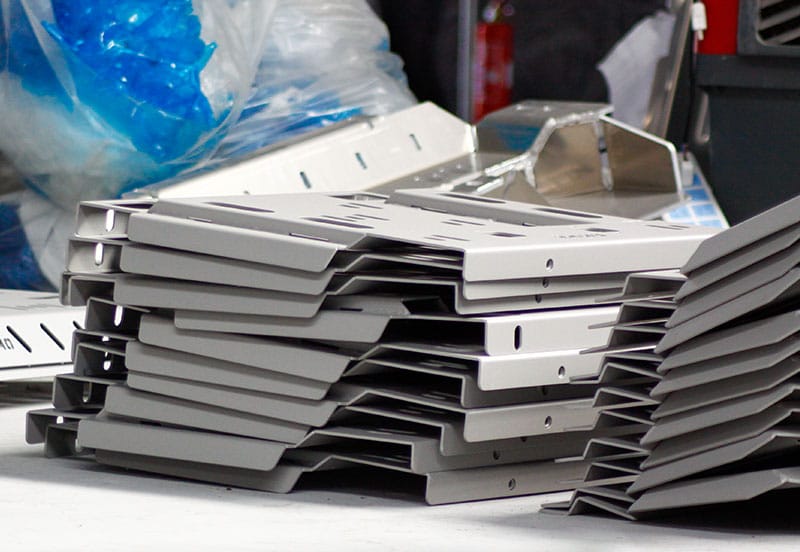
In recent years, with the continued popularity of off-road culture globally and the rapid growth of outdoor adventure and self-driving expeditions, off-road vehicle skid plates (also known as underbody armor) have gradually become an important safety component in both aftermarket modifications and factory configurations. Especially in North America, Australia, the Middle East, and some regions with complex terrain, the market demand for underbody protection systems has shown a continuous upward trend.
1. The Increasing Complexity of Off-Road Environments Drives Upgraded Demand for skid plate
In complex environments such as gravel roads, rocky terrain, mud, and icy roads, vehicle chassis are highly susceptible to impact damage. Damage to critical components such as the oil pan, transmission, differential, and fuel lines not only results in high repair costs but can also directly affect driving safety.
Therefore, more and more vehicle owners are proactively upgrading their underbody protection systems, shifting from “basic protection” to “comprehensive chassis armor,” expanding the coverage from engine underbody plates to transmission underbody plates, transfer case underbody plates, and fuel tank protection structures.
2. Materials Technology Becomes the Core of Industry Competition
Currently, chassis skid plates on the market mainly use the following materials:
· Aluminum-Magnesium Skid Plates: Lightweight and highly corrosion-resistant, suitable for light to moderate off-road environments.
· High-Strength Steel Skid Plates: Extremely strong impact resistance, suitable for heavy off-road and extreme off-road scenarios.
· Composite Material Skid Plates (e.g., fiberglass/FRP): Combines strength and lightweight advantages, with outstanding corrosion resistance.
· Engineering Plastic Skid Plates (e.g., HDPE): Lower cost, suitable for the light protection needs of urban SUVs.
· Industry trends show that balancing lightweight and high strength is becoming a key focus of R&D, especially against the backdrop of energy-saving vehicles and the rise of new energy off-road vehicles, which places higher demands on weight control.
3. Growth Driven by Both OEMs and the Aftermarket
The current chassis skid plate market mainly consists of two parts:
· OEM Market: More and more SUVs, pickup trucks, and off-road vehicles are equipped with or have skid plate systems as standard or optional at the factory to meet different market regulations and user scenarios.
· Aftermarket Modification Demand: Off-road enthusiasts, outdoor adventurers, and professional off-road vehicle teams are the core consumer groups in the aftermarket. They typically choose thicker skid plates or a full chassis armor system depending on the terrain.
Especially in the North American and Australian markets, the mature DIY modification culture drives continuous iteration and upgrades of chassis skid plate products.
4. Design Trends: Parallel Development of Modular and Integrated Structures
Modern chassis skid plate design is evolving from single-component protection to a systematic structure:
Modular design: Facilitates maintenance and replacement, adaptable to different vehicle platforms
Integrated full-coverage chassis armor: Enhances overall protection capabilities and reduces weak points
Design that balances heat dissipation and protection: Optimizes thermal management through airflow vents and ventilation structures
Quick-release structure: Improves maintenance efficiency and adapts to off-road racing and long-distance travel needs
This design upgrade not only improves safety performance but also enhances the product’s adaptability in professional off-road applications.
5. New Energy Off-Road Vehicles Bring a New Round of Technological Challenges
With the rise of electric SUVs and electric off-road vehicles, chassis structures have undergone significant changes, with battery packs becoming a new core protection target.
This places higher demands on chassis underbody protection plates: Greater impact and puncture resistance; Stronger insulation and thermal protection; More precise structural matching and lightweight design; Co-design capability with the battery pack thermal management system.
In the future, skid plate will not only be “mechanical protection,” but also an important component of the “battery safety system.”