
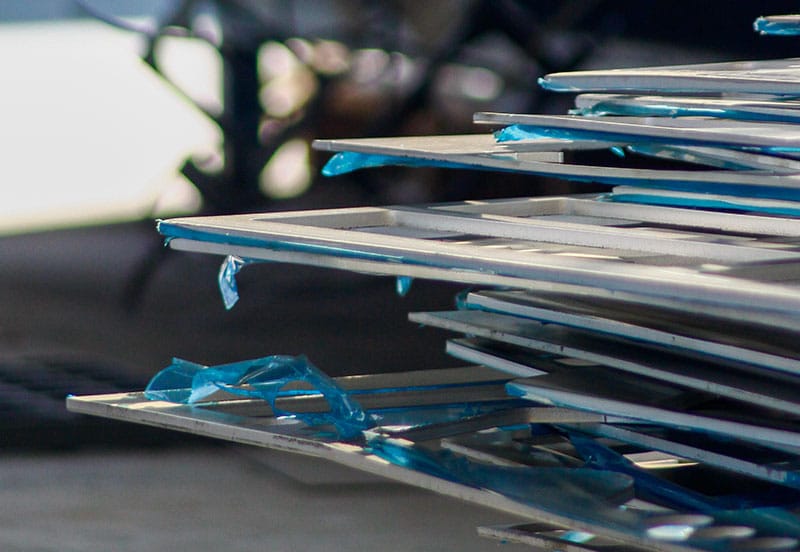
As application scenarios become increasingly complex, off-road vehicle chassis skid plates are undergoing rapid upgrades in material selection and structural design. Currently, mainstream materials include aluminum alloys, high-strength steel, engineering plastics, and composite materials, each with its own advantages in strength, weight, and corrosion resistance.
Aluminum alloy skid plates are widely used in light to medium-duty off-road scenarios due to their lightweight characteristics, while high-strength steel skid plates are more commonly used in extreme off-road and professional racing environments. Meanwhile, composite materials (such as fiberglass reinforced plastic, FRP) are becoming an important development direction in the field of lightweight protection due to their excellent corrosion resistance and structural plasticity.
In terms of structural design, the industry is evolving from traditional single-layer protection to modular, multi-point support, and integrated chassis armor structures. At the same time, to balance heat dissipation and protection capabilities, some products are beginning to incorporate airflow channels, ventilation structures, and quick-assembly designs to improve vehicle compatibility and maintenance efficiency.
The current development of off-road chassis skid plate materials exhibits three distinct trends: Lightweight priority: The use of aluminum alloys and composite materials continues to rise. High strength requirements coexist: Extreme off-roading still relies on steel skid plates. Upgrades driven by new energy: Electric vehicle chassis place greater emphasis on comprehensive performance encompassing protection, insulation, and thermal management. Future skid plate material selection will no longer be a simple strength comparison, but rather a systematic design centered around vehicle weight control, safety levels, and application scenarios.
Overall, the dual upgrades in materials and structure are driving the development of chassis skid plates towards higher performance and broader application scenarios.